@ezsportswear2: Gimana nihh…. 🤔 #ezsportswear #jerseybasket #customjersey #indonesiabasketball #NBA #perbasi

EZ Sportswear NEW
EZ Sportswear NEW
Open In TikTok:
Region: ID
Tuesday 09 July 2024 13:50:13 GMT
152725
6561
121
182

Music

Download

Comments

gijednopp
gijed💙 :
sedangkan di indo.....
2024-07-09 13:57:49
136

reza21889
Teh manis :
energy bar 10k protein 2gr😹
2024-08-15 14:00:52
6

alexbizer12345
van hohenhaim :
gw pernah di fonis dokter kelebihan protein,mungkin itu ya yg jadi pemicu tinggi gw 179 umur 15 tahun
2024-07-09 16:27:52
28

yonatan1234.tanta
Yonatan1234 Tantan :
🧠:kenapa ya gw gk lahir di maerica😩
2024-08-14 07:31:24
20
sayy1ddd
Sayyid Atthur :
min spill lah produk sepatu baru nya pengen liat gw
2024-07-09 23:48:18
1

dmx_prime
blade :
tpi gw liat skrg anak2 smp dah pada tinggi2 jir😅
2024-08-09 06:25:53
0
darkmatter3352
rascalflat :
7500 dapet ga ya
2024-08-07 05:49:18
0

rajaspanboys
3SOME'Rajaa :
Ke Amerika yok
2024-07-11 04:09:09
10

roby50882
Bryan :
klo di indo bukan protein yg tinggi tpi gula yg tinggi 🤣
2024-07-11 10:15:14
4
jazukek
What i tryna do :
gw kaget ngeliat proteinnya...
2025-07-21 10:25:39
0

ziroo_30
Gorax :
Amerika: nasi itu cuma untuk menambah energi Indonesia: makan nasi banyak gizi
2025-04-04 05:16:17
0

baba.fahmi6
Baba Fahmi :
badan mereka juga besar
2025-07-01 14:54:58
0
ggwaah
Azkar_32 sikma😺 :
kalsium sama proteiin paling bikin tinggi itu yang mana?
2024-07-21 02:53:14
0

haimasmaul
N.Maulana.Abd :
Indo .. Mie lidi x Seblak kering x The gelas x Mie cup 🔥🔥
2025-01-31 17:37:10
1

yyzuuuinhere
R :
bersyukur dah gua tb 178 di indo cui
2024-07-20 12:36:06
0

emilthetrainmasters
Emil :
yang ada harga snack makin mahal
2024-07-12 00:45:36
0

jiannn870
N :
di Indonesia overdosis karbohidrat dan gula
2024-08-15 10:35:44
1

iical_30
iical :
di us : kaya protein di indo : kaya dengan gula + karbo
2024-07-22 04:01:12
5
durianyrahel1rahel
BERLIN ☄️MAHAL :
Indonesian aja mau bubar,malah mikirin tinggi boro boro🤣
2025-09-03 23:15:19
0

thewolffnafchanne1
🦍xdnotcoolface🗿🗿 :
gw kelebihan protein malah bisul
2024-09-19 21:32:38
0

a9._44
blck fish :
tukang cilok bi lek 🗿
2024-10-25 14:56:35
0

restuspirit
spiritkitaid media inspiratif :
https://ole.co.id/di-balik-mega-dan-rendy-sang-mvp-ada-sensasi-nurlaili/
2024-07-23 23:47:21
0

hasy704
SECUKUPNYA :
disini dah pada cuci darah 😁
2024-07-27 01:57:14
0

izeelllllll
R :
mau bet jir 20% 😭
2024-09-16 12:34:51
0
To see more videos from user @ezsportswear2, please go to the Tikwm homepage.

Other Videos

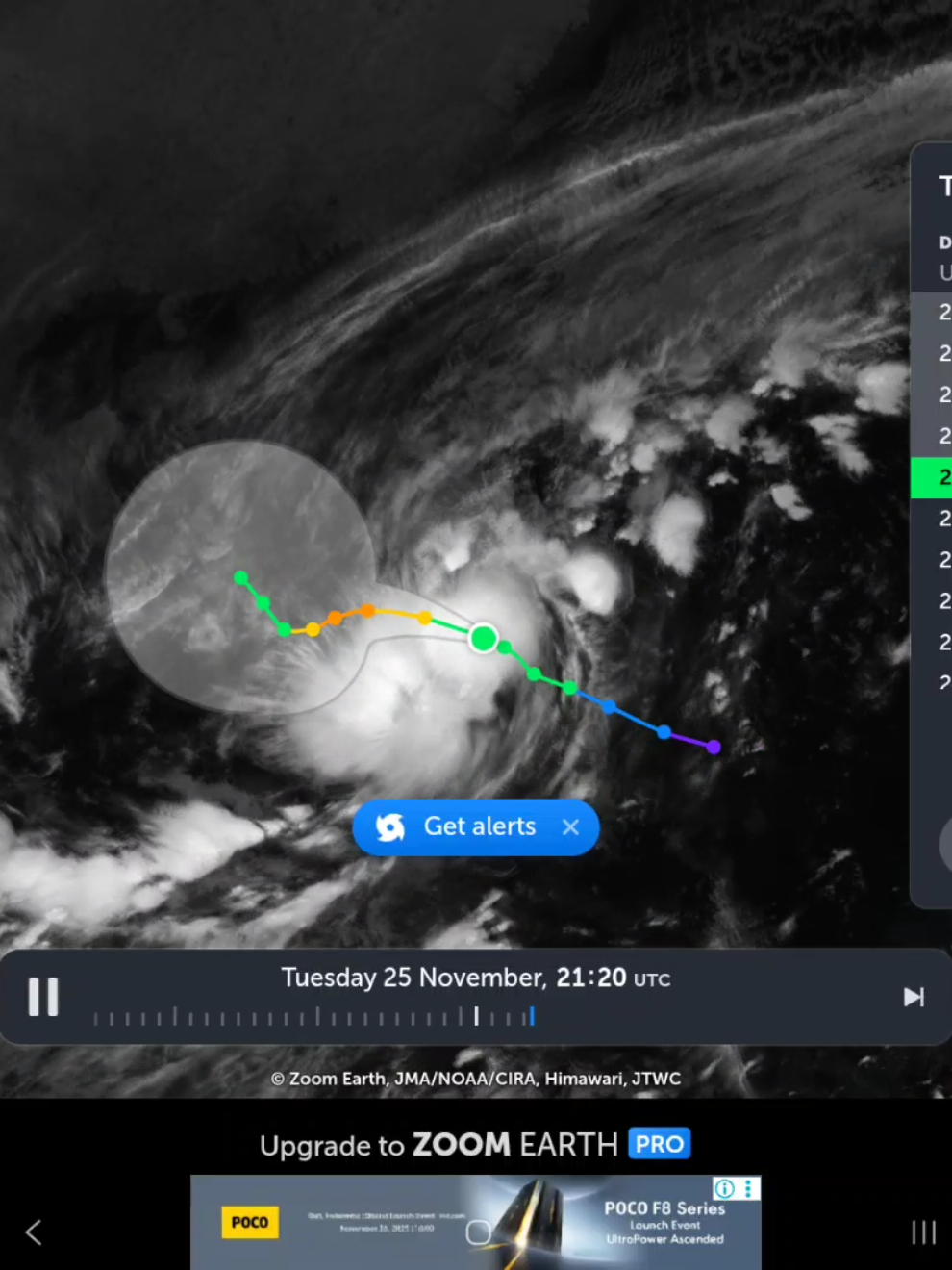
Information provided by JTWC Wind speeds and categorizations may differ from those reported by local meteorological agencies. Koto (Philippine name Verbena, Japanese Typhoon Number 27) is located 333 km southwest of Manila, Philippines, and has tracked northwestward at 20 km/h (11 knots) over the past 6 hours. Maximum significant wave height is 7.3 meters (24 feet). Koto is forecast to continue track west-northwestward along the southwestern edge of the steering ridge for the next 24 hours, before it will begin to slow down precipitously as it slams into the strong northeasterly flow associated with a cold surge event pushing south into the South China Sea. The system will slam on the brakes shortly after 24 hours, and slowly drift generally westward over the next 3 days, where after it becomes almost quasi-stationary as it moves into a weak steering pattern in the deep-layer sense and is blocked from further westward motion due to the strong north easterlies trapped between the storm and the coast of Vietnam. There is significant uncertainty in the long-range forecast track, as the system will remain in the weak steering pattern, caught between ridging extending from Thailand south to Indonesia and then into the western Pacific. The GFS shows a stronger southwesterly flow in the South China Sea to the south of the system and a weaker ridge of Thailand, while the ECMWF is the opposite, representing the two main outliers in terms of the overall steering pattern. The track should drift northwestward at a snails pace, as the system separates from the weakening cold surge flow and trends towards a weakness in ridge to the north. However, a more erratic track is definitely a possibility. The system is forecast to steadily intensify under favorable conditions, to a peak of 130 km/h (70 knots) in 24 hours, before it is confronted by rapidly increasing deep-layer shear beginning shortly after 24 hours. The system weakens sharply under the influence of this high southerly shear over the next 4 days, but once the system separates from the cold surge flow, shear will decrease once more beginning in around 4 days, which will allow for the system to start intensifying once again over the next 5 days and beyond. Deterministic track guidance is in poor agreement, particularly after 2 days, as the global models begin to diverge in their handling of the overall steering environment. The JTWC consensus has been modified to eliminate less reliable models from the consensus, and the resulting consensus is compared closely with the ensembles and the AI model guidance to generate the forecast track. The JTWC forecast track is consistent with the modified consensus over the next 2 days, then is placed roughly at the average between it and the ECMWF AIFS and GDM tracks. Confidence is low after 2 days due to extreme spread across the model package. Intensity guidance is in general agreement on intensification over the next 24 hours, followed by a general weakening thereafter. Models disagree on the peak intensity, ranging between CTCX on the low end at about 110 km/h (60 knots), and HAFS-A on the higher end near 140 km/h (75 knots). Several RI aids have been tripped on this run, supporting peak intensities between 140–195 km/h (75–105 knots) within the next 24 to 36 hours. The JTWC forecast is placed between the HAFS-A and consensus mean through the forecast period. Warning Number 5. Information provided by the Joint Typhoon Warning Center (JTWC).

About